
What's the best way to get someone to fill out a form?
When they don't realize it, of course.
My role: UX consultant
The task: Create the UI for an application that would connect tech jobs to the right people, fast.
The job market was booming for developers, and one start up was poised to make it easier for them to connect with recruiters. The users, the highly sought-after developers, would likely use this app from their phone. The challenge was to get them to onboard and fill out their profile as quickly and easily as possible. Every question should be answered with a tap or a swipe. There should be as little typing as possible.
Job application sites traditionally have a big burden on the user to express what they are interested in, and what their qualifications and experience are. The users of this app were particularly prone to lose interest and abandon the site if we asked too much of them.
So I studied dating sites to see how they onboarded people. Sites like e-Harmony are very good at asking a series of questions that are fun and interesting, more like a conversation than a sign-up form. The user is entertained and engaged instead of bored. This became our model going forward.
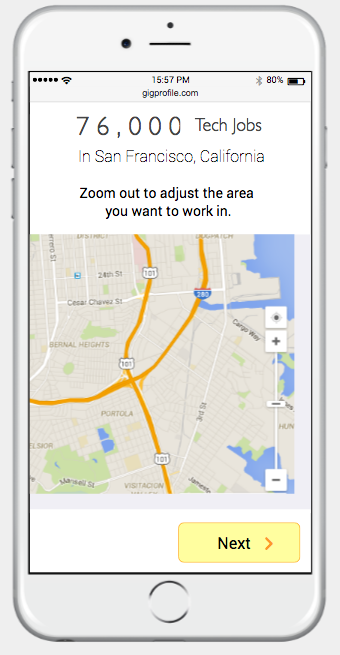
The app rewarded the user every time they put in some information. Here they learn how many tech jobs are in the area after setting their location.
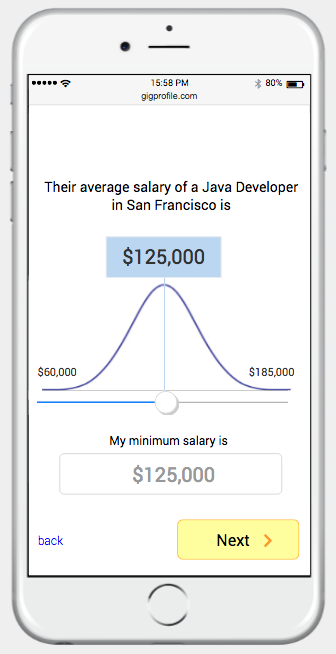
We provided context to make it easier to answer the questions. When asking what salary people wanted, we provided a graph of the average salary of the job and location.Instead of typing in numbers, they adjusted the slider bar.
Forms are where good intentions go to die. Every abandoned form represents a person who wanted to do something — apply for a job, donate to a cause, sign up for a service — and couldn't quite get there. This project taught me that the best form isn't a form at all. It's a conversation. We need to ask what does this person actually needs to feel confident enough to take this step. The answer to that question is always better design than anything a form field can offer.